




Executive Strategic Assessment
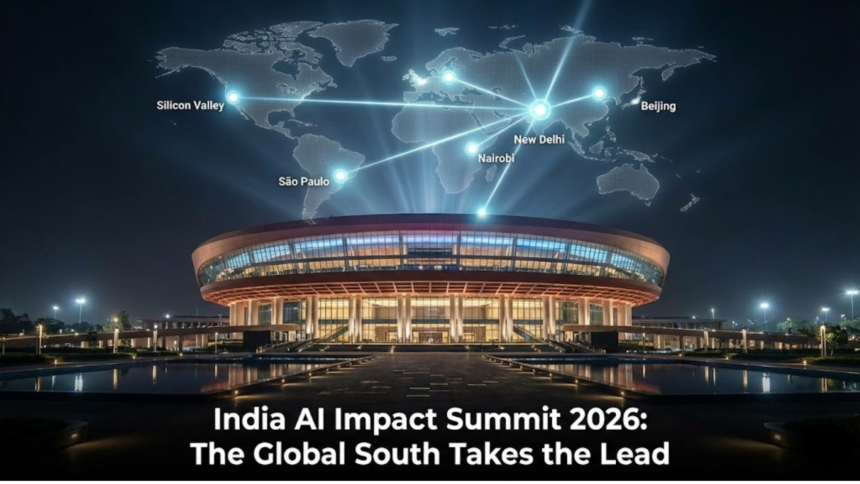
The India AI Impact Summit 2026, convened from February 16–20 at Bharat Mandapam in New Delhi, represents a definitive structural realignment in the global trajectory of artificial intelligence governance. Anchored by the Ministry of Electronics and Information Technology (MeitY), Digital India, and the IndiaAI Mission, the summit serves as the first global AI convening hosted by the Global South. This geographical and ideological shift marks a departure from the “safety-first” containment paradigms that characterized the preceding summits in Bletchley Park (UK), Seoul (South Korea), and Paris (France). Instead, New Delhi has engineered an “Impact-First” architecture, prioritizing the democratization of compute, the deployment of Digital Public Infrastructure (DPI), and the operationalization of AI for sustainable development goals (SDGs).
- Executive Strategic Assessment
- 1. The Geopolitical Architecture: From Containment to Deployment
- 2. The Philosophical Framework: Sutras and Chakras
- 3. The Stakeholder Landscape: A Convergence of Power
- 4. Economic Implications: The $100 Billion Pipeline
- 5. Programmatic Deep Dive: The Five Days of Impact
- 6. Innovation Challenges: The Grassroots Engines
- 7. Operational Logistics and City Preparation
- 8. Conclusion: The Rise of the “India Model”
The summit’s scale is unprecedented, with over 35,000 registrants from more than 100 nations, including 15–20 Heads of Government and over 50 international ministers. The convergence of the world’s most capitalized technology firms—represented by CEOs from NVIDIA, Google, Microsoft, OpenAI, and Meta—alongside sovereign leadership indicates a recognition of India not merely as a market of 1.4 billion data points, but as the pivotal geography for the next phase of AI scaling. The projected investment pipeline linked to the summit exceeds $100 billion, targeting sovereign cloud infrastructure, semiconductor fabrication, and energy resilience.
This report provides an exhaustive analysis of the summit’s geopolitical architecture, thematic frameworks, stakeholder dynamics, and economic implications, synthesizing data to offer a comprehensive operational picture of this landmark event.
1. The Geopolitical Architecture: From Containment to Deployment
1.1 The Trajectory of Global AI Summits
To understand the significance of the New Delhi summit, one must contextualize it within the lineage of global AI diplomacy. The inaugural AI Safety Summit at Bletchley Park (November 2023) was dominated by “existential risk” narratives, focusing on frontier model capabilities and catastrophic vectors. The subsequent Seoul Summit (May 2024) and Paris AI Action Summit (February 2025) began to broaden the scope, but remained anchored in the regulatory anxieties of the Global North.
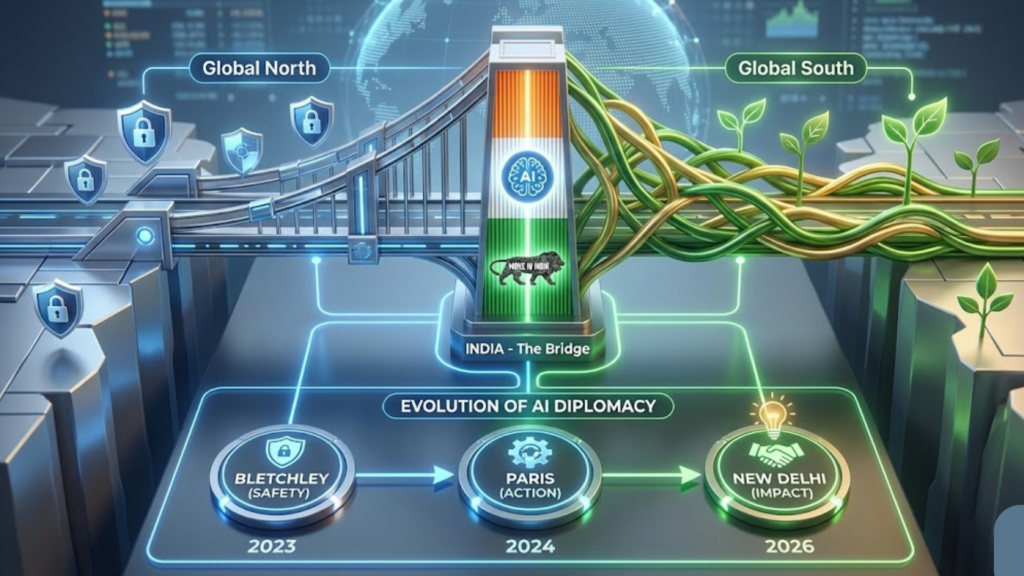
The India AI Impact Summit 2026 disrupts this lineage by asserting that for the majority of the global population, the primary risk of AI is not extinction but exclusion. The “India Model” leverages the summit to shift the discourse from “fear-driven regulation” to “deployment-led innovation”. This aligns with India’s domestic success in DPI (e.g., UPI, Aadhaar), proposing a similar “public rails” approach to artificial intelligence where foundational models and compute are treated as public utilities rather than proprietary walled gardens.
1.2 The Global South Narrative and “Non-Alignment” 2.0
The summit is explicitly framed to amplify the voice of the Global South—nations in Africa, Latin America, and Asia that have largely been rule-takers rather than rule-makers in the digital age. By co-chairing critical working groups with nations like Egypt and Kenya , India is institutionalizing a multilateral approach that demands equitable access to the “means of AI production”—specifically, data sets, algorithmic transparency, and affordable GPU compute.
A critical geopolitical maneuver is India’s decision to invite China as a “Partner Nation”. Despite complex bilateral border tensions, New Delhi has adopted a pragmatic techno-diplomatic stance. By including China—the only other nation with a comparable foundational model ecosystem to the United States—India prevents the summit from becoming an echo chamber of Western policy. This “multi-aligned” strategy allows India to position itself as the bridge between the US-led innovation ecosystem and the developmental needs of the emerging world, ensuring that global AI standards remain interoperable rather than bifurcated.
2. The Philosophical Framework: Sutras and Chakras
The summit’s intellectual architecture is distinctively indigenized, utilizing Sanskrit philosophical concepts to structure the technocratic debate. This serves a dual purpose: it asserts cultural confidence and offers a holistic framework that integrates ethics with economics.
2.1 The Three Sutras (Foundational Pillars)
The “Sutras” serve as the moral compass for the event, ensuring that technical discussions remain tethered to human outcomes.
- People (Sarvajana Hitaya): AI must serve humanity in all its diversity. This pillar focuses on mitigating bias, ensuring dignity, and preventing the “digital caste system” where AI benefits accrue only to the cognitive elite. It emphasizes “inclusive-by-design” architectures.
- Planet: Acknowledging the massive carbon footprint of Generative AI, this pillar mandates that innovation must align with environmental stewardship. It prioritizes energy-efficient algorithms and green data centers.
- Progress (Sarvajana Sukhaya): The benefits of AI must be equitably shared to advance global development. This moves beyond “trickle-down tech” theories to active redistribution mechanisms via open-source contribution and public-private partnerships.
2.2 The Seven Chakras (Thematic Working Groups)
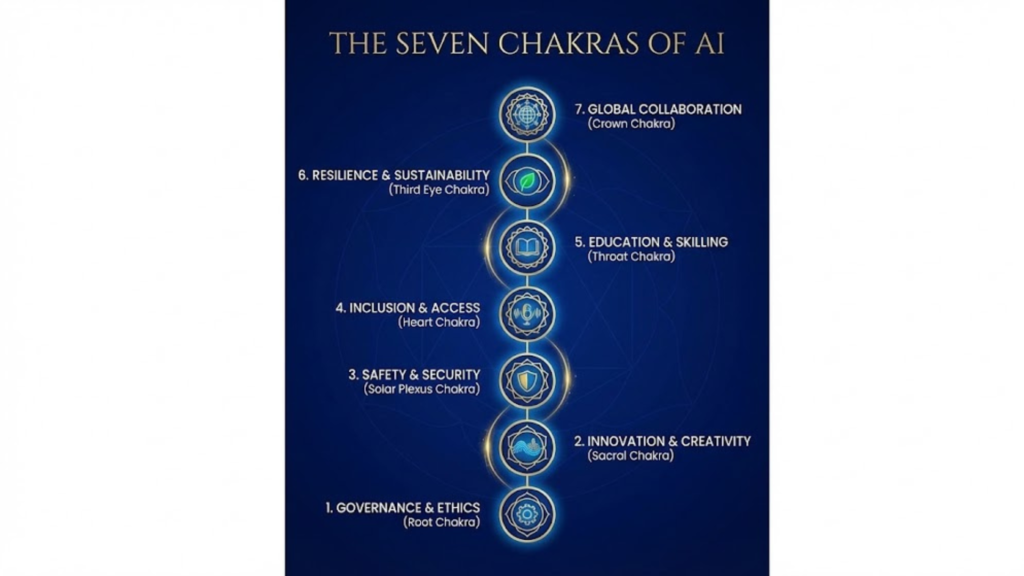
The “Chakras” are the operational engines of the summit. These seven working groups have conducted months of pre-summit deliberations to draft the consensus points for the final Leaders’ Declaration.
AI Chakras (Working Groups) – Core Mandate & Strategic Implications
| Chakra (Working Group) | Core Mandate | Strategic Implication |
|---|---|---|
| 1. Human Capital | Skilling and Workforce Transition | Addressing the “AI divide” by focusing on reskilling the 490 million informal workers in the Global South rather than just elite developers. |
| 2. Inclusion for Social Empowerment | Access for Underserved Communities | Promoting “Voice-First” AI (like BHASHINI) to bypass literacy barriers, enabling interaction with digital services via vernacular speech. |
| 3. Safe & Trusted AI | Transparency and Accountability | Establishing the IndiaAI Safety Institute (AISI) to create deployment-focused safety standards, distinct from the theoretical safety focus of Western institutes. |
| 4. Science | AI for Discovery | Accelerating material science, genomics, and climate modelling through AI; leveraging the Anusandhan National Research Foundation (ANRF). |
| 5. Resilience, Innovation, Efficiency | Systemic Robustness | Focusing on energy efficiency in compute; managing the grid load of India’s projected 9.2 GW data center capacity by 2030. |
| 6. Democratizing AI Resources | Equitable Infrastructure Access | The “DPI for AI” thesis; ensuring that compute and foundational models are accessible to startups and public sector entities, not just mega-corporations. |
| 7. AI for Economic Development | Productivity and Growth | Quantifying the GDP impact of AI adoption in sectors like agriculture (precision farming) and manufacturing. |
3. The Stakeholder Landscape: A Convergence of Power
The attendee list for the India AI Impact Summit 2026 is a definitive roster of the current global power structure in technology. The simultaneous presence of fierce competitors and divergent political systems underscores the centrality of India to the future of AI.

3.1 The Silicon Valley Delegation (The “Big Tech” Titans)
The summit witnesses the largest-ever delegation of US technology leadership to India, organized largely by the US-India Strategic Partnership Forum (USISPF). These leaders are not merely attending for optics; they are negotiating the terms of access to the world’s fastest-growing digital market.
Key Global AI Leaders – Roles, Organizations & Strategic Relevance
| Name | Role | Organization | Strategic Agenda & Relevance |
|---|---|---|---|
| Jensen Huang | Founder & CEO | NVIDIA | Infrastructure Dominance: Securing India’s sovereign AI compute contracts. NVIDIA is central to the $100B investment pipeline, supplying H100 / Blackwell clusters for Indian data centers. |
| Sundar Pichai | CEO | Google & Alphabet | Ecosystem Integration: Deepening Google’s tie-in with India’s DPI; launching localized Gemini models for Indian languages; reinforcing the Android AI ecosystem. |
| Sam Altman | CEO | OpenAI | Market Expansion: India is ChatGPT’s largest market by downloads. Attending closed-door strategy meetings and a standalone OpenAI event (Feb 19) to navigate regulatory landscapes and enterprise adoption. |
| Dario Amodei | CEO | Anthropic | Developer Capture: Positioning Claude as the safer, more reliable alternative for India’s massive developer base; hosting a “Builder Summit” in Bengaluru concurrently. |
| Mark Zuckerberg / Alexandr Wang | CEO / Chief AI Officer | Meta | Open Source Standard: Promoting Llama as the default foundational model for Indian startups and government applications, countering closed models. |
| Satya Nadella / Brad Smith | CEO / President | Microsoft | Enterprise Entrenchment: Solidifying Microsoft’s grip on India’s IT services sector via Copilot integration; advocating for cross-border data flow governance. |
| Demis Hassabis | CEO | Google DeepMind | Scientific Frontier: Keynoting the Research Symposium; exploring collaborations between DeepMind and Indian scientific institutes (IISc, IITs). |
| Cristiano Amon | CEO | Qualcomm | Edge AI: Pushing for on-device AI processing in smartphones and laptops, crucial for a mobile-first market like India. |
| Shantanu Narayen | CEO | Adobe | Creative Economy: Leading the USISPF delegation; focusing on AI tools for India’s creative and media sectors. |
| Arthur Mensch | CEO | Mistral AI | Sovereign Alternative: Representing European open-weight models, offering India an alternative to US-centric dominance. |
3.2 Global Political and Sovereign Leadership
The summit acts as a geopolitical forum, with participation from 15–20 Heads of Government and over 50 Ministers.
- Host Leadership:
- Narendra Modi (Prime Minister, India): Inaugurating the summit; positioning India as the “Vishwaguru” (World Teacher) of inclusive technology.
- Ashwini Vaishnaw (Minister of Electronics & IT): The architect of the event; driving the investment negotiations.
- S. Krishnan (Secretary, MeitY): Overseeing the bureaucratic execution and delegate coordination.
- International Heads of State (Confirmed & Expected):
- Emmanuel Macron (President, France): Expected to attend, maintaining the momentum from the Paris AI Action Summit and reinforcing the India-France strategic tech partnership.
- Lula da Silva (President, Brazil): Expected; representing the voice of Latin America and BRICS.
- Alar Karis (President, Estonia): Confirmed as Chief Guest for the Research Symposium; Estonia is a global leader in digital governance.
- Navinchandra Ramgoolam (Prime Minister, Mauritius): Confirmed; highlighting regional cooperation in the Indian Ocean rim.
- Ministerial & Institutional Delegations:
- United States: A high-level White House advisory delegation, supported by the USISPF business cohort.
- Partner Nation: China has been invited as a partner nation, a significant diplomatic gesture intended to align global standards on foundational AI technology.
- International Bodies: High-level representation from the World Bank, World Economic Forum (Børge Brende), and UN Agencies, focusing on financing AI for development.
3.3 Domestic Industry and Civil Society
India’s domestic heavyweights are attending to demonstrate the maturity of the local ecosystem.
- Mukesh Ambani (Reliance Industries): Driving the “Jio Brain” initiative and sovereign AI infrastructure.
- N. Chandrasekaran (Tata Sons): Integrating AI into the diverse Tata portfolio (steel, auto, aviation).
- Nandan Nilekani (Infosys): The philosophical father of India’s DPI, advocating for “population-scale AI”.
- Kiran Mazumdar-Shaw (Biocon): Representing the intersection of AI and biotechnology.
- Civil Society: Organizations like Creative Commons (Anna Tumadóttir) and OpenUK (Amanda Brock) are attending to advocate for open data and copyright reform.
4. Economic Implications: The $100 Billion Pipeline
The summit is a catalyst for massive capital injection into India’s digital economy. Union Minister Ashwini Vaishnaw has projected that the event will crystallize an investment pipeline of nearly $100 billion, building upon an existing base of $70 billion.
4.1 Infrastructure Investment
- Data Centers: The primary capital sink. India aims to scale its data center capacity from roughly 1 GW to 9.2 GW by 2030. Investments from Blackstone, various sovereign funds, and tech giants are expected to be announced to fuel this expansion.
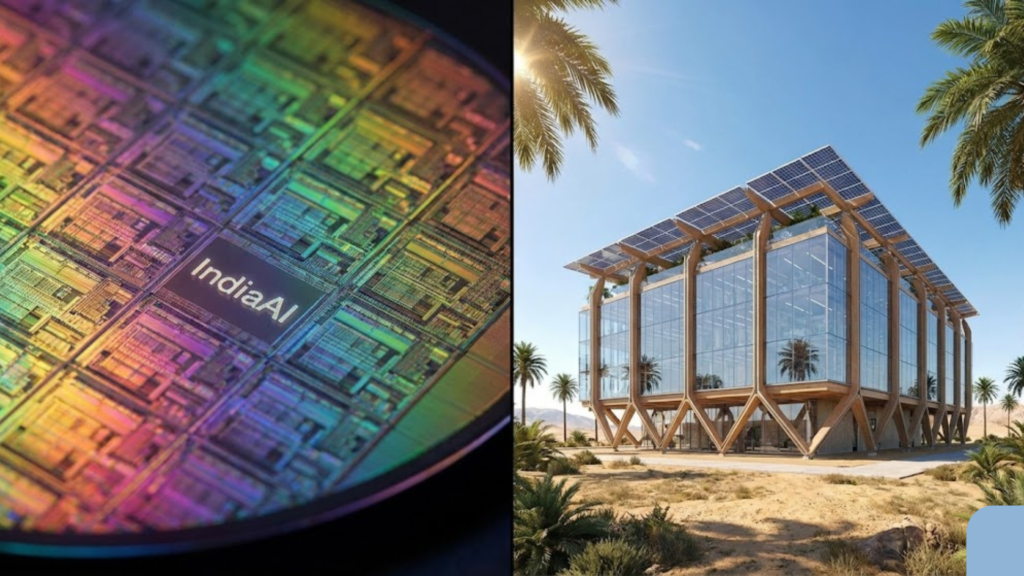
- Semiconductors: The summit reinforces India’s semiconductor mission. With Jensen Huang (NVIDIA) and Cristiano Amon (Qualcomm) present, discussions will focus on localizing the supply chain for AI chips and bringing “packaging and testing” (ATMP) facilities to India.
4.2 The “Hospitality Super-Cycle”
The economic impact is immediately visible in the micro-economy of New Delhi. The influx of global delegations has triggered an unprecedented surge in hospitality pricing, termed a “super-cycle” by industry analysts.
Hotel Property Pricing Surge During High-Profile Summit
| Hotel Property | Standard Nightly Rate (Est.) | Summit Nightly Rate (Feb 18) | Increase Factor | Context |
|---|---|---|---|---|
| The Oberoi, New Delhi | ₹30,000 – ₹50,000 | ₹1.18 Crore (5-day Suite Package) | ~300× (Package) | Hosting top-tier CEO delegations. |
| Taj Palace | ₹25,000 | ₹30 Lakh (Presidential Suite) | ~120× | Proximity to diplomatic enclave. |
| The Leela Palace | ₹51,000 (Premier Room) | ₹17.3 Lakh (Luxury Suite) | ~33× | Hosting USISPF events. |
| Standard 5-Star Hotels | ₹15,000 – ₹20,000 | ₹80,000 – ₹1.5 Lakh | ~5–7× | General delegate overflow. |
Implication: This inflation reflects the scarcity of ultra-luxury infrastructure in New Delhi relative to the magnitude of global capital converging on the city. It underscores the intense competition among corporations to secure proximity to political decision-makers during the summit.
5. Programmatic Deep Dive: The Five Days of Impact
The summit schedule is designed to transition from broad policy framing to specific technical and industrial outcomes.
Day 1: February 16, 2026 – The Inauguration & Vision
- Theme: “From Vision to Action.”
- Primary Venue: Bharat Mandapam.
- Key Proceedings:
- Opening Keynotes: Addresses by PM Modi and key visiting Heads of State, framing the “Global South” agenda.
- Expo Inauguration: Opening of the India AI Impact Expo, featuring 300+ exhibitors across 10 thematic pavilions.
- Side Event (Bengaluru): Anthropic Builder Summit. While the political leadership is in Delhi, Anthropic is engaging the technical core in India’s “Silicon Valley,” Bengaluru, focusing on the Claude API and model safety.
Day 2: February 17, 2026 – Sectoral Impact & Knowledge
- Theme: “Deepening Sectoral Dialogues.”
- Key Releases: Launch of Knowledge Compendiums (Casebooks). These are not just reports but operational manuals for deploying AI in:
- Health (Global South focus)
- Energy (Efficiency and Grid Management)
- Education (Personalized Learning)
- Gender Empowerment.
- Sessions: “Seminar on Applied AI” and presentations from the “AI by HER” Global Impact Challenge finalists.
Day 3: February 18, 2026 – Science & Research
- Theme: “Bridging Research and Practice.”
- Key Event:Research Symposium on AI and its Impact.
- Keynote Speaker: Demis Hassabis (CEO, Google DeepMind) on the frontiers of AGI and scientific discovery.
- Chief Guest: H.E. Alar Karis, President of Estonia.
- Content: Presentation of frontier work, evidence-based policy insights, and a “Global South Research Showcase” highlighting papers from non-western institutions.
- Industry Sessions: Concurrent tracks where startups and enterprises present scalable solutions to investors.
Day 4: February 19, 2026 – The Leaders’ Plenary
- Theme: “Strategic Commitments.”
- Key Proceedings:
- Formal Opening Ceremony: Led by Prime Minister Modi.
- CEO Roundtable: A closed-door, high-stakes meeting between the PM, senior ministers, and the visiting global CEOs (Altman, Huang, Pichai, etc.) to finalize investment commitments and policy frameworks.
- Leaders’ Plenary: A multilateral session for Heads of State to debate and refine the text of the Leaders’ Declaration.
- Side Event (New Delhi): OpenAI Invitation-Only Event. Sam Altman and the OpenAI leadership team will host a private gathering for top Indian VCs, developers, and enterprise partners to discuss the roadmap for AGI in India.
Day 5: February 20, 2026 – The Declaration & Roadmap
- Theme: “The Way Forward.”
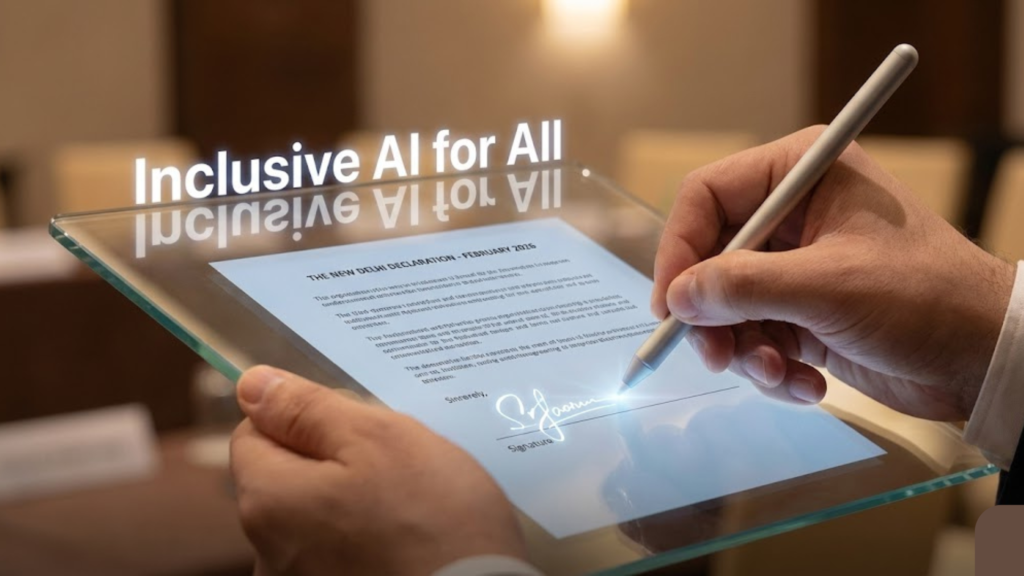
- Outcome: Adoption of the New Delhi Leaders’ Declaration. This document is expected to codify the “Impact-First” approach, distinct from the Bletchley Declaration’s safety focus.
- Closing: Announcement of the roadmap for the IndiaAI Mission and future regional summits.
6. Innovation Challenges: The Grassroots Engines
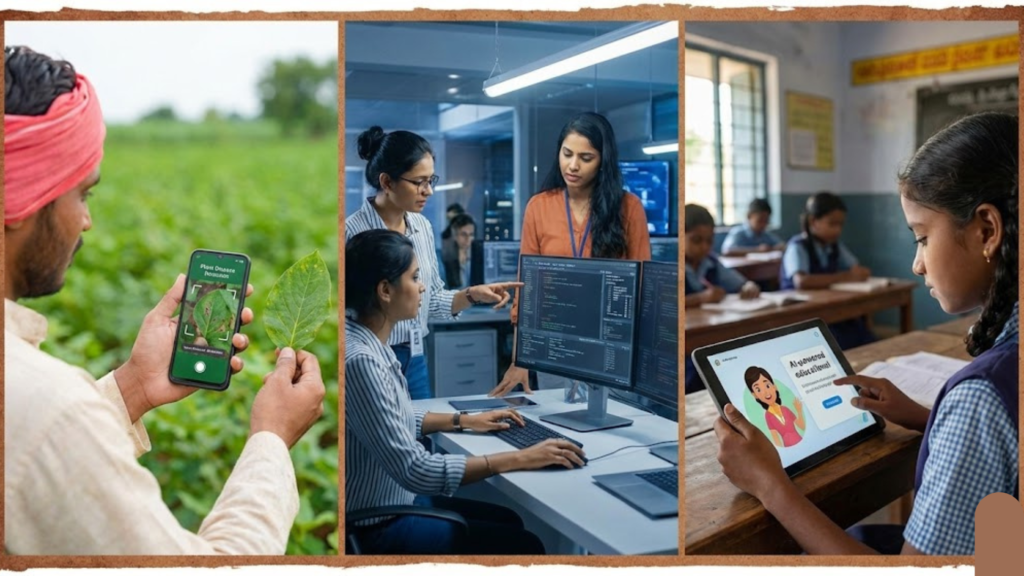
To ensure the summit results in tangible solutions rather than just high-level policy, the government has launched three flagship “Global Impact Challenges.” These competitions funnel innovation from the grassroots directly onto the global stage.
6.1 AI for ALL: Global Impact Challenge
- Partner: Startup India (DPIIT) and Digital India BHASHINI Division.
- Objective: Identify pilot-ready AI solutions that address critical developmental needs.
- Themes:
- Agriculture: Crop productivity, climate resilience, and supply chain logistics.
- Healthcare: Worker shortages, remote diagnostics, and resource utilization.
- Education: Personalized learning tools for diverse linguistic contexts.
- Incentives: Awards up to INR 2.5 Crore for top winners; travel support for 20 finalists to attend the summit; mentorship and cloud credits.
6.2 AI by HER: Global Impact Challenge
- Partner: NITI Aayog’s Women Entrepreneurship Platform (WEP).
- Objective: Explicitly targeting women-led teams to bridge the gender gap in tech leadership.
- Structure: A dedicated pipeline providing investor readiness bootcamps and an exclusive investor pitch session during the summit for the top 30 finalists.
- Focus: Solutions that promote gender equity and are scalable across the Global South.
6.3 YUVAi: Global Youth Challenge
- Target: Young innovators aged 13–21 years.
- Partner: National Institute of Electronics & Information Technology (NIELIT).
- Objective: Building the long-term talent pipeline. Top 20 finalists are invited to a “Demo Day” at the summit to present their prototypes to global leaders.
7. Operational Logistics and City Preparation
Hosting an event of this magnitude requires a massive logistical mobilization, transforming New Delhi into a fortress of digital diplomacy.
- Venue: Bharat Mandapam, Pragati Maidan. This state-of-the-art convention center, which hosted the G20 Summit, is the physical epicenter. It features multiple auditoriums (L2 Audi II, Plenary Hall) to accommodate simultaneous tracks.
- City Makeover: The Delhi Public Works Department (PWD) and civic bodies have executed extensive upgrades to road infrastructure, lighting, and signage around the IGI Airport, the Diplomatic Enclave, and major tourist sites like the Qutub Minar and Red Fort. A central control room monitors traffic and security to ensure seamless movement for VIP delegations.
- Registration: The summit has processed over 35,000 registrations. The process is rigorous, requiring government ID verification and strict photo specifications (white background, official attire) to manage security. Notably, there are no registration fees for the Innovation Challenges, ensuring that financial barriers do not prevent grassroots talent from participating.
8. Conclusion: The Rise of the “India Model”
The India AI Impact Summit 2026 is a geopolitical statement. It signifies the end of the “Safety Phase” of global AI governance, where the primary concern was containment, and the beginning of the “Impact Phase,” where the primary concern is distribution.
By convening the Global South, engaging China, and securing the attendance of the entire Silicon Valley elite, India is executing a “multi-aligned” strategy. It refuses to choose between US innovation and Global South solidarity, instead positioning itself as the indispensable bridge between the two. The “India Model”—characterized by Digital Public Infrastructure, open technology stacks, and inclusive deployment—is being proffered as the alternative to the closed, proprietary models of the West. As the delegates converge on Bharat Mandapam, the message is clear: the future of AI will not just be written in code, but in the policy frameworks that determine who gets access to that code.